Cherry Hill structural drying specialists
Dry the structure, not just the floor
Moisture meters can show what is still wet after the standing water disappears.
Cherry Hill structural drying specialists
Moisture meters can show what is still wet after the standing water disappears.
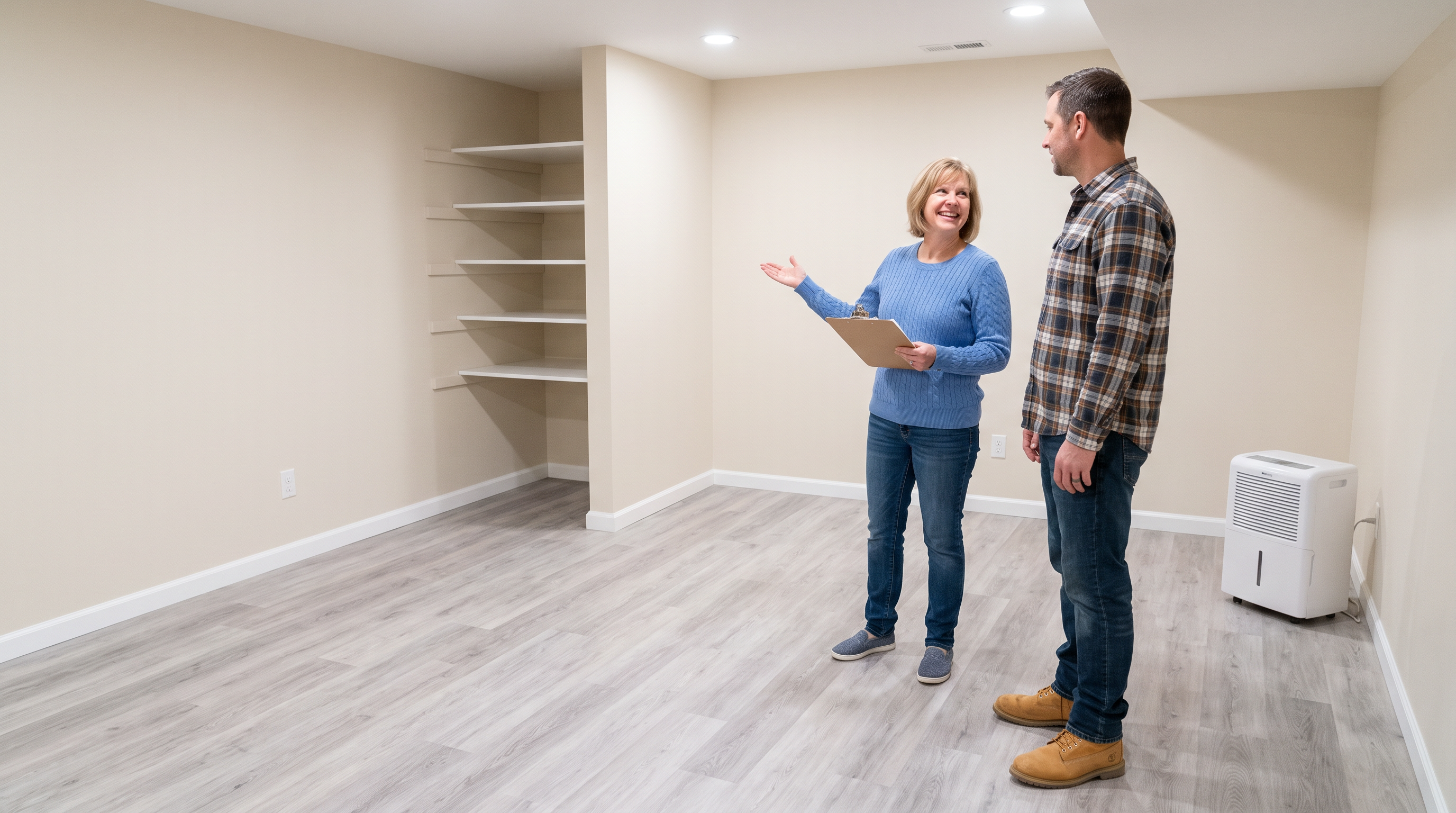
A basement can look dry and still hold moisture in the wall base, sill plate, insulation, carpet backing, and slab edge. In Cherry Hill homes from the 1960s through the 1980s, finished lower levels often hide the wettest materials behind paneling, drywall, cabinets, or built-in storage.
Structural drying uses airflow, dehumidification, heat control, selective openings, and repeated moisture checks. The goal is to bring building materials back to an acceptable dry standard before paint, flooring, or trim covers them again.
Contractors should document starting readings, equipment placement, daily progress, and final readings. Those logs help prove the home was dried instead of cleaned on the surface. They also help the homeowner answer adjuster questions when the carrier reviews mitigation costs.
Cherry Hill's humid summer air can slow drying if the basement stays closed up or if the HVAC spreads damp air through the house. Proper drying controls the indoor environment while wet materials release moisture into the air.

Structural drying combines equipment, material decisions, and documentation until affected materials reach target moisture levels.
The contractor checks drywall, wood, subfloor, trim, cabinetry, and insulation. Readings identify what can dry in place and what needs opening or removal.
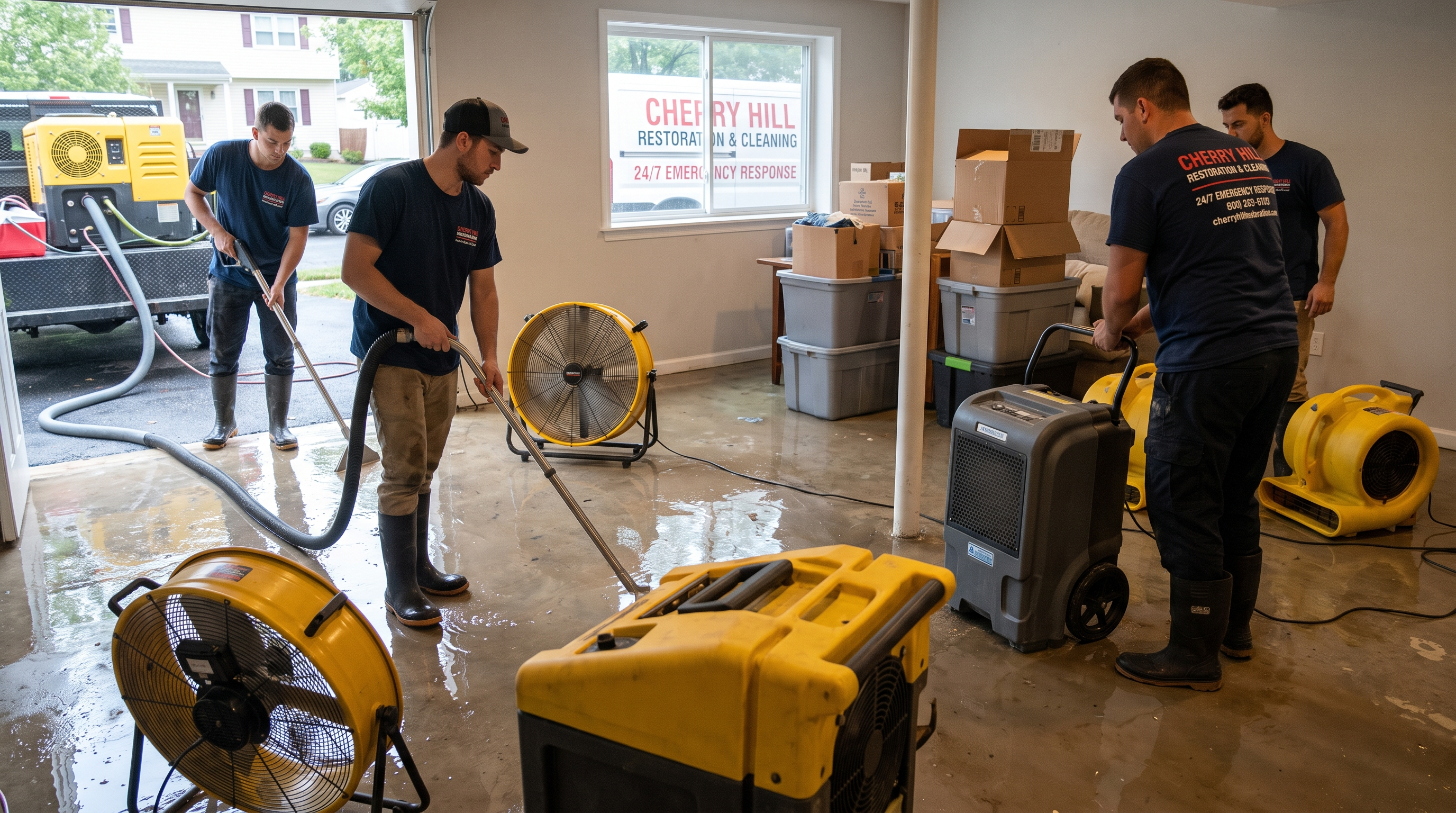
Air movers push moisture out of materials, and dehumidifiers remove that moisture from the air. Equipment placement changes based on room layout, temperature, and the wettest materials.
Some materials trap water too tightly to dry in place. Wet pad, swollen laminate, soaked insulation, and contaminated drywall may need removal so framing and cavities can dry.
A carrier may ask why equipment ran for several days. Moisture readings, photos, and equipment notes give the homeowner a record of what the contractor found and dried.
Cherry Hill basements often have framed walls, flooring layers, and stored contents. The drying plan has to follow moisture behind finishes, not stop at the open floor.
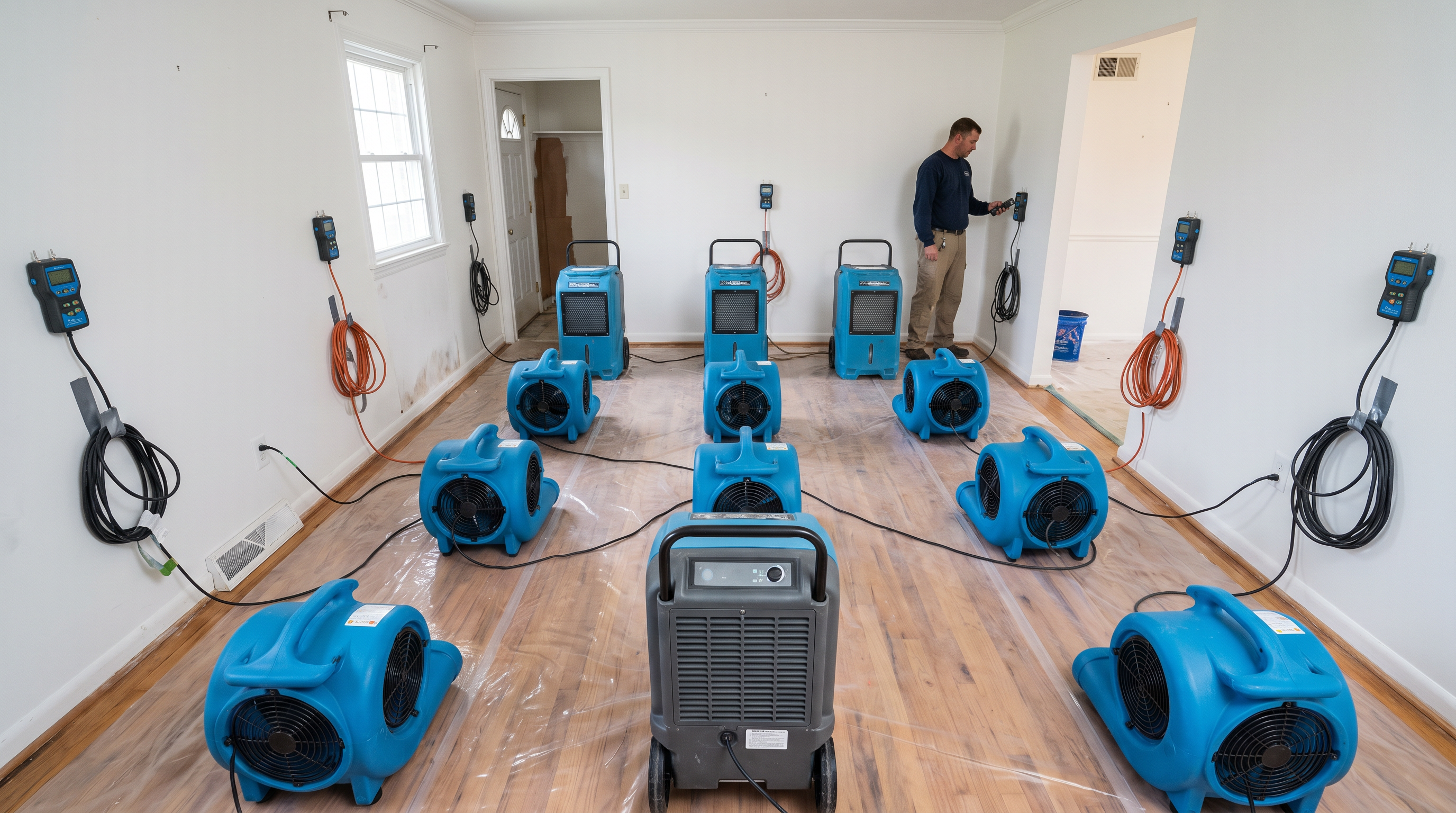
Ask for moisture readings before closing walls or replacing flooring.
Free — no obligations
The contractor records which materials are wet and how far moisture has traveled from the source.
Air movers, dehumidifiers, containment, and temperature control are selected for the affected rooms.
Baseboards, flooring, drywall, cabinets, or insulation may be opened or removed where trapped moisture cannot escape.
Moisture readings are checked until the structure reaches the agreed dry target and the repair scope can move forward.