Serving Laurel Springs
Emergency Water Extraction in Laurel Springs
Call us for a free emergency water extraction estimate
Serving Laurel Springs
Call us for a free emergency water extraction estimate
Standing water is the part homeowners see first, but extraction also controls how far the loss spreads. In Cherry Hill basements, water can move under carpet pad, behind baseboards, into wall cavities, and across slab cracks while the main puddle looks stable.
Emergency extraction starts with the water source. A burst supply line, washing machine overflow, sump pump failure, and rainwater entry through a foundation each change the safety steps and the insurance record. Category 1 clean water can turn into Category 2 or Category 3 water when it sits, mixes with debris, or runs through contaminated areas.
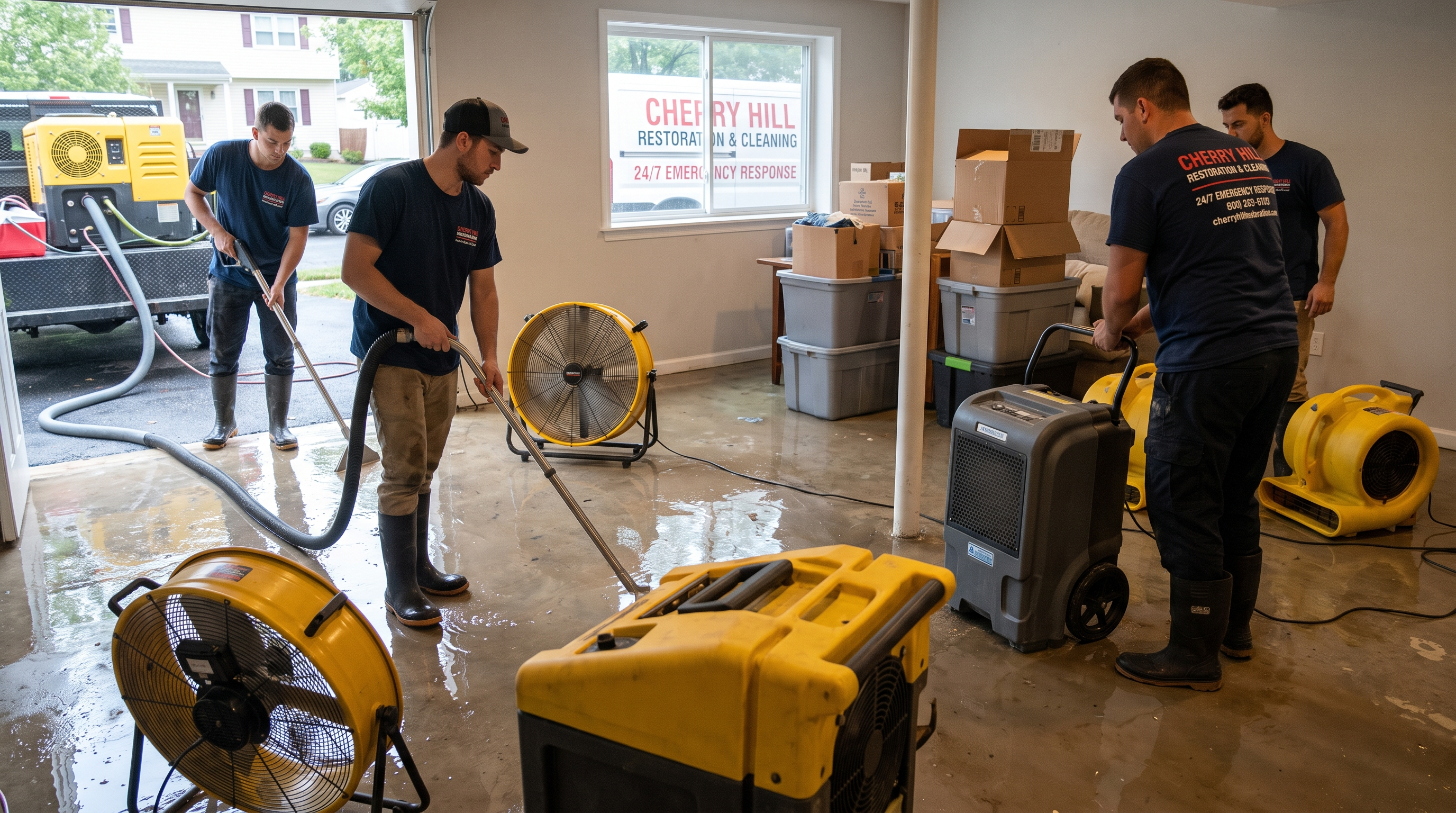
Contractors use pumps, weighted extraction tools, wet vacuums, moisture meters, and containment as the situation requires. The work should also include early decisions about carpet pad, insulation, laminate flooring, and porous contents that may not dry in place.
In Cherry Hill, storm outages create a common pattern: the sump stops, groundwater rises, and the basement fills before the homeowner can restart the pump. Fast extraction gives the drying equipment a chance to work before humidity and trapped moisture push the job into mold prevention or demolition.
Laurel Springs has older borough homes, ranches, and compact lots where grading, downspouts, and basement walls can all affect water entry. During heavy rain, water can reach slab edges, crawlspaces, utility penetrations, and low basement corners before anyone notices.
A Laurel Springs cleanup should start with the source and the water category. Clean water from a pipe has a different plan than gray water from a sump failure or Category 3 sewage backup. Once the water is out, moisture readings, drying equipment, and material removal decisions protect the house from mold growth and repeat repairs.
Cherry Hill storm calls often involve a failed pump and a finished basement. The contractor match focuses on removing water and checking hidden wet materials before the pump pit looks normal again.
Removing water is only the first step. The contractor should leave the property with a drying plan, moisture readings, and a clear next move for damaged materials.
Call before the water line becomes a mold line.
Free — no obligations