Cherry Hill basement flood cleanup specialists
Cleanup for flooded Cherry Hill basements
Start cleanup before groundwater, wet finishes, and humid air create a second problem.
Cherry Hill basement flood cleanup specialists
Start cleanup before groundwater, wet finishes, and humid air create a second problem.
Basement flood cleanup is the call Cherry Hill homeowners make after the sump pump fails, the power goes out, or storm water pushes through a foundation wall. The room may have only an inch of water, but that inch can ruin carpet pad, trim, drywall bottoms, storage boxes, and furniture legs.
Older block and poured foundation walls can leak at cracks, wall-floor joints, window wells, and utility penetrations. Finished basements from the 1960s through the 1980s often have wall systems and flooring layers that keep moisture hidden after the surface dries.
The cleanup plan should identify the water source. Groundwater intrusion and sump pump failure may trigger different coverage questions than a broken pipe or appliance leak. If sewage or drain backup enters the space, the job moves into contaminated water handling.
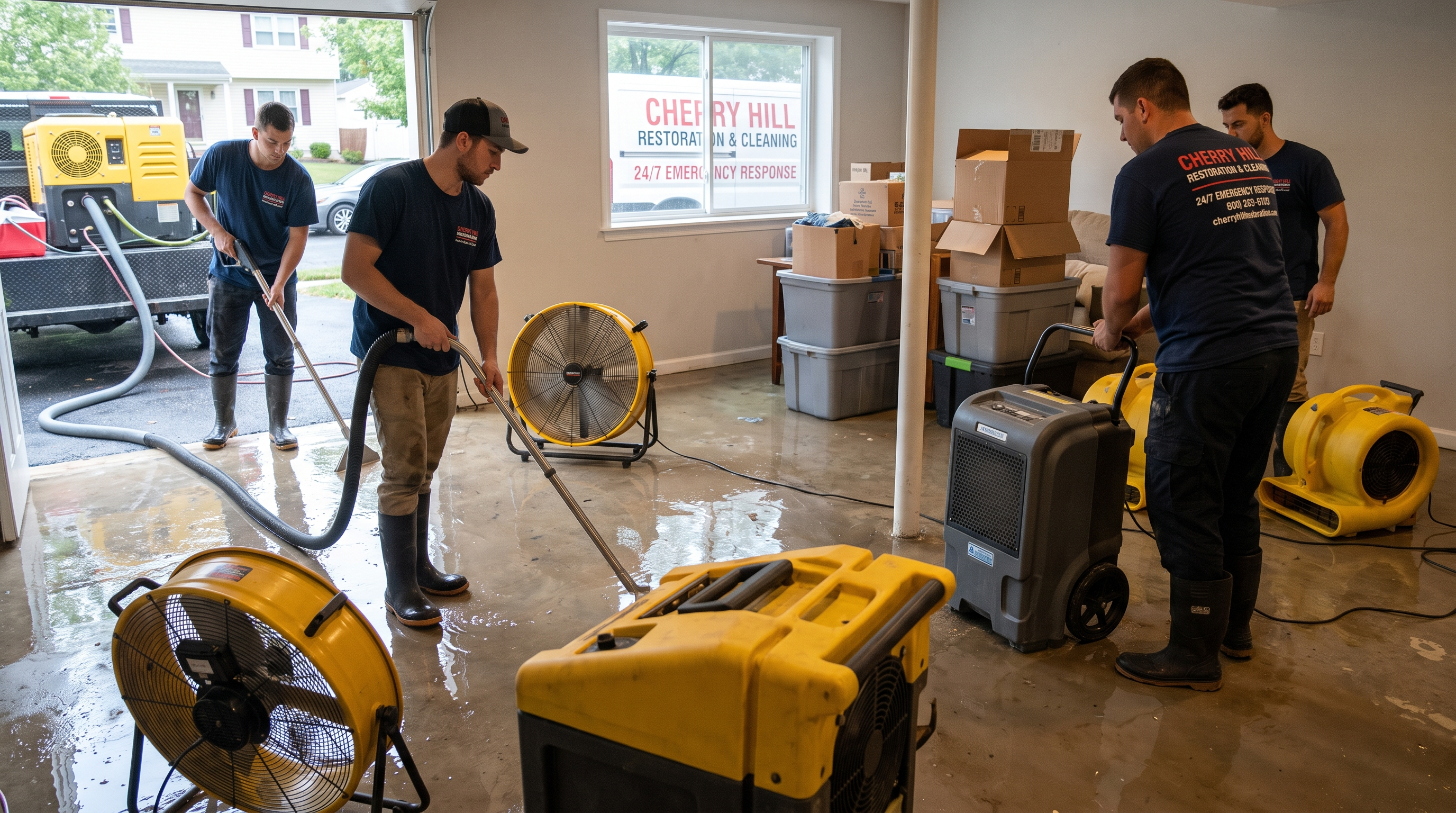
Cherry Hill's summer humidity makes basement drying harder. A contractor should extract water, remove unsalvageable materials, dry the structure, check contents, and document the loss before the carrier file depends on memory.

Basement flood cleanup covers water removal, material decisions, drying, contents handling, and source documentation.
The contractor checks the sump pump, foundation walls, drains, plumbing, window wells, and exterior water paths. The source affects safety, drying, and insurance coverage.
Water is removed from the floor, carpet, slab edges, and low areas. Wet pad, swollen flooring, soaked drywall, and contaminated items may need removal.
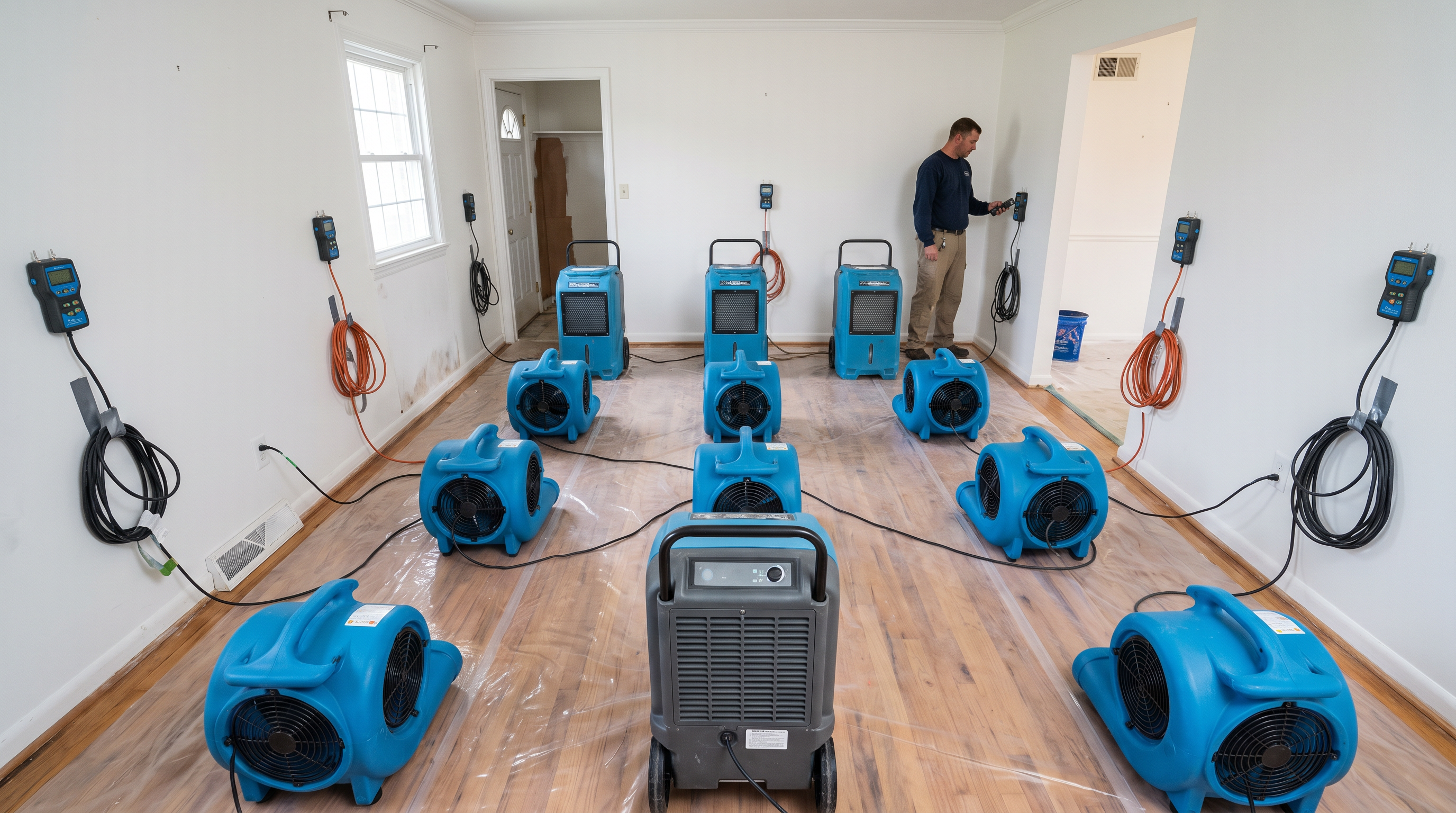
Equipment dries the structure while contents are moved, inventoried, cleaned, or discarded with documentation. Moisture readings guide when the basement can move to repair.
Sump pump failure during outages is the area's top water damage event. The contractor match focuses on pump pits, finished walls, stored contents, and the hidden moisture path after a storm.
Basement claims can turn on whether water came from a sudden covered source, a pump failure with endorsement, sewage backup, or excluded groundwater seepage. Early documentation gives the homeowner cleaner facts.
Get the basement inspected before the next storm adds more water.
Free — no obligations
The contractor reviews pump failure, storm entry, plumbing, drains, electrical hazards, and water category.
Standing water is pumped or extracted from the basement, including carpet, slab edges, stair landings, and low areas.
Wet drywall, trim, flooring, insulation, boxes, furniture, electronics, and documents are inspected for drying or removal.
Equipment runs until moisture readings support repair, and the contractor documents the source, damage, and affected materials.